Sometimes you find hidden treasures in used book stores and good libraries. Today, in our local library, I found Gandhi’s Satyagraha (non-violent resistance), published in 1958 by Navjivan Publishing House in Ahmedabad, original price four rupees. Which is less than $0.10 today but probably closer to a dollar back then.


Reading
Sudhir and Barack Go to Chicago
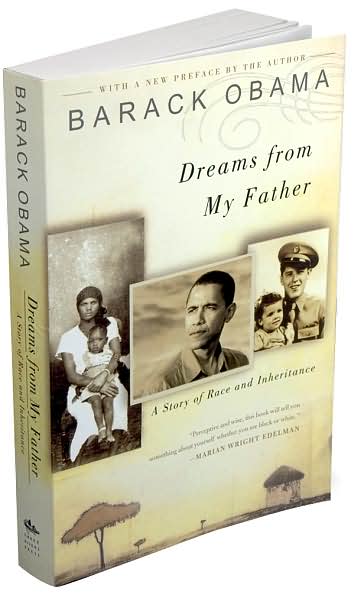 I had not planned it this way, but these past couple of weeks I was listening to the good president Obama narrate Dreams From My Father during my commute, and reading Sudhir Venkatesh’s Gangleader For a Day as I fell asleep.
I recommend both books– especially Dreams to understand the incredibleness of what we’ve wrought here by electing Barack Obama president. Talk about the audacity of hope. And hearing him narrate it is quite a pleasure, doing voices, Kenyan accents, f’words and all.
∞
If you’ve read Freakonomics, you’ve read Sudhir Venkatesh‘s work. The chapter about why drug dealers live with their mothers was based on his research. This guy is a son of Indian immigrants, raised in protected suburbs of California, studying sociology in the worst neighborhoods of Chicago the only way that seems logical to him. By hanging out with the drug dealers, the hustlers, the prostitutes and average folk in the Robert Taylor Homes, projects in the south side of Chicago. By hanging out with them for more than half a decade.
It is quite a story, and it smashes all kinds of stereotypes about people who live in these circumstances.
∞
And it was chance that I was reading both of these books at the same time, but they have a common thread. Poor black communities in Chicago, their communities, community leadership, the futility and the hopefulness.
 Obama was there in the mid-80s (in this book, obviously he comes back to Chicago later in life), working as a community organizer to help people. Venkatesh was there in the early ’90s, seeing things from the other side, among the poor, the hustled, the hustlers. Where Obama is hopeful, Venkatesh starts out naive and ends up cynical. To be fair, in the time-frames that these books cover, Venkatesh has actually spent more time among the poor black community than Obama.
But I wonder if their paths ever crossed? Venkatesh was a graduate student in the University of Chicago while he was hanging out in Robert Taylor. Obama was a professor there at the same time. There are only two references I can find. The first is that Obama is in Venkatesh’s documentary Transformation. And this Forbes article:
(Venkatesh) heartily approves of the proposal by Barack Obama–a fellow pickup basketball player at the University of Chicago when Venkatesh studied there–to expand the Earned Income Tax Credit to give a bigger break to low-income parents.
So did they play basketball with each other, or did they both happen to play basketball in the same university around the same time? It’s like saying I played basketball in Chicago when Jordan played for the Bulls. I did. In a suburban driveway.
∞
The governor of my state, Deval Patrick, lived in the Robert Taylor Homes. So did Mr. T. I wonder if their paths ever crossed?
The Graveyard Book
Yes, it’s still Neil Gaiman week.
Neil Gaiman‘s latest book, loosely based on The Jungle Book, is a wonderful thing. Where Kipling’s Jungle Book had a human child raised by animals in a jungle, Gaiman’s Graveyard Book has him raised by ghosts in a graveyard. There are a few other parallels, in characters and in passages, but this book is its own beast.

This was my third audiobook (I’m going to stop keeping count now), and Gaiman himself reads. He does an excellent job, doing the voices of all types of creatures, keeping it just as spooky and mysterious as it needs to be.
∞
There might be a Graveyard Book movie. Can we have Henry Selick animation again? No, it seems like we’ll be getting Neil Jordan and live action.
A Very Old Ping Pong Game of Ideas
Christopher Lydon’s Radio Open Source, channeling Suketu Mehta (author of Maximum City, highly recommended), mentions something that I’ve been thinking about for a while now:
a deep ping-pong game of ideas runs long and strong under the US-India connection: from Thoreau’s ecstatic reading of the Bhagavad Gita to Gandhi’s reading of Thoreau’s Civil Disobedience, from Martin Luther King Jr.’s reading of Gandhi to Barack Obama’s reading of Gandhi through King and his White House embrace of Prime Minister Singh last week.
I’ve lived all but one year of my life in three states: Obama’s, Gandhi’s and Thoreau’s. Though Hawai’i, Kansas, Indonesia, and Kenya claim Obama as their own. Which says a lot.
Coraline and Neil Gaiman
 This is Neil Gaiman week for me. I’m audiobook-ing his The Graveyard Book (excellent so far) and we just watched Coraline, based on his book.
First, Coraline. This is a Henry Selick movie, so if you’ve seen The Nightmare Before Christmas or James and the Giant Peach, you know the look/feel. It’s a movie that doesn’t reveal all the secrets of its world. A world that could house a million other stories, of which our story tellers have chosen the one about Coraline. Pan’s Labyrinth or PJ Hogan’s Peter Pan come to mind.
It’s a story of the neglected little girl Coraline, who finds her other mother in an alternate other world behind a small locked door in her house. Her other mother, and her other father, seem perfect– they give her almost too much of all the things she craves from her real parents. Of course, they are not as they seem. For one, they have buttons instead of eyes.
Neil Gaiman and Henry Selick are made for each other– I would love to see Gaiman’s Sandman or The Graveyard Book animated in a similar fashion. The background music, by Bruno Coulais, is especially good: listen to the track Exploration here.
I’ll review his The Graveyard Book when I’m done– it’s a riff on Kipling’s Jungle Book, substituting ghosts and other spooky types for animals. But it’s a lot more than that. I’m more than halfway through, and I’m having a lot of fun.
Oh, and Gaiman’s an excellent audiobook reader. He’s perfect for his material.
∞
I am a huge Neil Gaiman fan. The Sandman series is probably my favorite series of graphic novels. Good Omens and American Gods are great. But more recently, I’ve discovered that he has a really fan-friendly online presence. He answers reader questions on his blog, quite regularly. And he’s a avid twitterer. And he looks like Sandman.
 Things
You must be logged in to post a comment.