This was one of those weekends.
It was a long weekend. Six movies since Friday night. Can you decipher them from the title of this post?
My movies and the movies I like.
This was one of those weekends.
It was a long weekend. Six movies since Friday night. Can you decipher them from the title of this post?
This week’s pick is actually two versions of the same song– Mad World.
The original is by ’80’s pop rock duo Tears for Fears, and sounds exactly like you would expect an ’80’s pop hit to sound. Synthesizers and percussion, and a pace meant for dance.
Continue reading
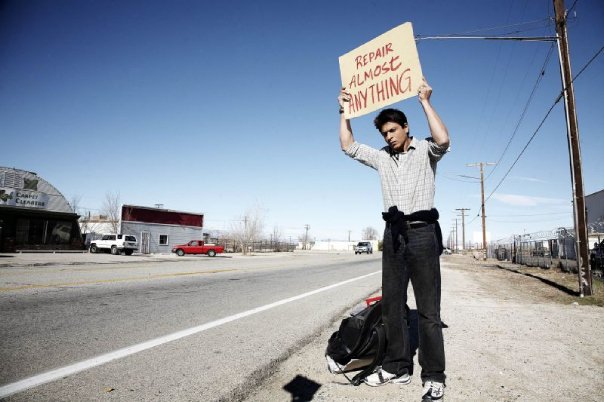
I’m just going to put down my initial thoughts about the movie that I just saw, Karan Johar’s My Name is Khan. I don’t think I can review this film, in any traditional sense. It is too full, too much going on, too many good things and even more bad. So I’ll just talk about things that left an impression.
Continue reading
Our nation turns its lonely eyes to you.
Ten years ago, Ram Gopal Varma could do no wrong in my eyes. He was coming off a run that included Rangeela, Satya, Kaun?, Mast and Company. And, under his production banner, he had started to nurture a new era directors of thrillers and comedy. He helped usher in the current style of Hindi cinema– the edgy thrillers and the broad comedies.
But then he went off the deep end.
Bhoot, Naach, Sarkar, RGV ki Aag, Sarkar Raj have been not just disappointing, but downright bad movies. This year’s Rann is fine, but is this the same person who made Satya?
What happened?
Part of my trouble with his recent movies is, in his own words, his “framing”. On his blog today, he has addressed this issue:
Film related people either say my frames look very unique or they say that they are too exhibitionistic or they say that they are unnecessarily bizarre and some even say that they are ridiculous. [..]
If Urmila’s swaying hip in “Rangeela” is being framed in a certain specific composition, a one inch zoom out or a one inch zoom in and a little pan here or there can both spoil or enhance the effect. Urmila’s swaying hip is the content and the way I particularly want to see it will be my frame.
My problem with all of that is, in the words of one of his characters in Naach:
Different banaane ka matlab ye nahi ke kuchh bhi bana do.
His camera shoots from beneath a glass table, or partially obstructed by some equipment. His shots aren’t set up– I’m disoriented, I don’t know which characters are in a particular scene. In a scene with other characters, all of a sudden I’ll see Abhishek Bachchan and wonder if this is the same scene or have we moved on to the next one? And then Abhishek will be speaking to Aishwarya and Aishwarya’s face will be bright but Abhishek’s will be dark. Why? He is speaking, I am looking at him, but I can’t see him clearly. His face is dark. This is deliberate, but it’s drawing attention to itself. Why make the viewer work so, so hard? Continue reading
 The steamy shower, the shadow behind the shower curtain, the raised, knife-wielding hand, that shrieking soundtrack and a screaming Janet Leigh have not only become legend in film, but also legend in parody. It has become so recognizable in modern times that when it is parodied I can sense young people nodding their heads in recognition even when they have no idea about its origins.
Alfred Hitchcock is as old as feature films themselves. Born in 1899 in London, Hitchcock was 26 when he directed his first film. His first “Hitchcockian” film, however, did not come until 1927 when The Lodger: A Story of the London Fog was released. With strangled blondes and young men falsely accused of crimes, it was a pre-cursor to many Hitchcock movies to come. By the time he was 30, he was on to his 10th film- Blackmail– which was one of the first sound films out of Britain. At the age of 30, he had moved to the United States and was working for acclaimed uber-producer David O. Selznick. The Hitchcock style had been established and was now being fine-tuned. Continue reading
 Things
You must be logged in to post a comment.