Death of a Soldier

I wrote this in 1996. Forgive me.

He had never fought a war before; at least not at such a high level.

As he walked through the battlefield, he realized the pressures. The pressures to perform, to win.

Most of his colleagues, the men who were in the same battalion had fought wars before, but he was new.

He was barely twenty. He was so scared, so nervous.

All of a sudden, he found himself surrounded by the enemy. Shots were fired right at him, one after another. He dodged a few blows, and defended the rest with his shield.

Just when he felt he could not save himself any more, one of his compatriots came to his rescue and inflicted a few blows on the enemies.

But the salvo on this young man continued. It was becoming more and more difficult to fend off the shots.

Then came the blow he would remember forever; one shot came right at him. He could not defend it well enough.

**

One more young man lost out in the battle field.

At that moment, a million people throughout the world heard a familiar voice from their TV sets say: “Debutant Vikram Rathour is out there, caught in the slips as India lose their first wicket against Pakistan here in Sharjah.”

— Devanshu Mehta (1996)

As an aside, who even remembers Vikram Rathour today? Six tests, seven one days and the away swinging ball always remained his weakness. His debut was in Sharjah, April 1996. He made 2 runs, his “compatriot” Sachin Tendulkar made 118. I remember that match, especially Azhar’s manic slogging in the last over. India made 305, the first ever Indian score over 300.
Mr. Vengeance


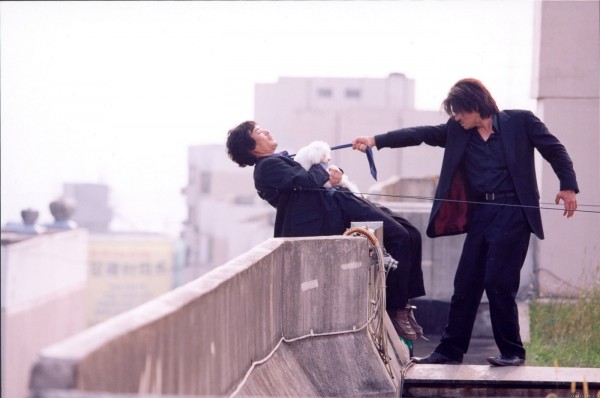
I finally saw Park Chan-wook’s Oldboy today– the uncompromising mother-of-all revenge films. This is not for the weak hearted. Or the weak stomach-ed. It is violent, but mostly the way Tarantino is violent– you see the perpetrator, not the victim, but what is being inflicted is so vile that your imagination takes over.

But it is, after all, a revenge film. But it’s more than that– it is an epic tragedy. It is raw and brutal in its violence and sexuality. And it is gorgeous– you could pause the movie at any point, and you’d have a hyper-stylized poster.

Oh, and it’s Korean; though the Netflix streaming version is dubbed.

Chan-wook’s JSA is one of the best movies of all time, and not as violent. Next up, I need to see Sympathy for Mr. Vengeance and Lady Vengeance. Yes, he has a Vengeance Trilogy.

For Bollywood types, Oldboy was copied recently as Zinda starring Sanjay Dutt. I haven’t seen it, but I’m guessing they’ve left some things out. I’m not sure Hindi cinema is ready for… well, I’m not going to give it away.

On “Making Movies” (and RGV)

A couple of days ago, Ram Gopal Varma wrote about one of his first reality checks while making Shiva twenty years ago:

I was so confidently clear about the opening shot of my first film “SHIVA” that the camera set on the crane should be showing the college in the suggestion of a college name-board, come down slowly and pan to the close-up of a car wheel coming into the foreground and stopping in front of the camera. Tired of my repeated narration of this shot of mine during the pre-production of SHIVA, my assistant Siva Nageshwar Rao advised me not to get fixed up about shots as it might not be always practically possible to do things on location the way one imagines while writing the script. He pointed out that it’s possible that the height of the crane might not match up to the height of the name-board of the college. Or if the board is too high we have to tilt the camera up and we will only see the sky in suggestion and not the college, and if it’s too low and you have to tilt down, either you will see the ground instead of the college or the travel downwards to the wheel in the foreground might not be enough.

Of course, these days with computer graphics (especially in Hollywood) I suppose you can compose any shot you want in post-production. But you can’t change the realities– the physics— of the world. This post reminded me of Sidney Lumet’s book Making Movies— specifically this passage on Kurosawa:

“I once asked Akira Kurosawa why he had chosen to frame a shot in Ran in a particular way. His answer was that if he he’d panned the camera one inch to the left, the Sony factory would be sitting there exposed, and if he he’d panned an inch to the right, we would see the airport – neither of which belonged in a period movie. Only the person who’s made the movie knows what goes into the decisions that result in any piece of work.”

The book is an excellent look at the process of making a film; what a director actually does from the day he gets the job to the release date.

The other great thing about RGV’s blog is the comments section— I was not the first person to make the Making Movies connection. Two other people (Arvind Swarup and the indefatigable Vamsee) had already mentioned it in context of this post. That comments section is a wonderful, crazy place and there’s a decent chance that if you say something insightful, meaningful or especially wacky, RGV will respond.

[My previous post on my impressions on the current state of RGV’s films.]

UPDATE: There is actually another clearer connection between RGV and Sidney Lumet. RGV’s latest Rann is an obvious descendant of Lumet’s Network (“I’m mad as hell and I’m not going to take it any more.“)

The Oscar Short Films: Mini-Reviews and Where to Watch Them

This year, I’m going to try to watch all the short films nominated for Oscars. Some are available online for free (and legal), some are available for $1.99 on iTunes, and some seem to be missing completely from the Internet. Bad on those nominees– it would have been easy money and publicity. I haven’t seen them all, but I’ll update this as/when I do.

Animated Shorts:

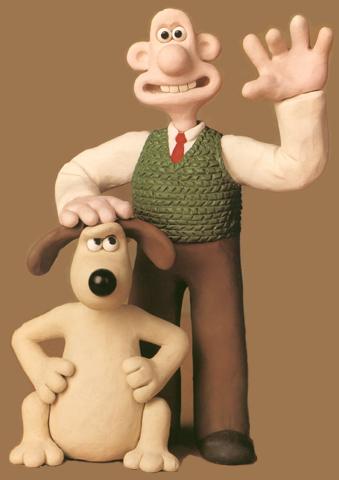
  • Wallace and Gromit: A Matter of Loaf and Death— I haven’t seen it yet, because it’s the longest (almost 30 minutes). But it’s Wallace and Gromit, so it’s most likely the best of the lot. They’ve already won three Oscars, so I wouldn’t be surprised if this was their fourth. Available on iTunes.
  • Granny O’Grimm’s Sleeping Beauty— an old grandmother re-tells the story of Sleeping Beauty, from the perspective of the old fairy that nobody loves. This one starts out mildly depressing and ends up creepy. Available on YouTube.
  • Logorama— this one is really inventive, subversive. I’m not sure what the message is, but it’s something about corporate/consumer culture, I’m sure. Available on iTunes.
  • The Lady and the Reaper— an epic battle between a doctor and the grim reaper for the life of an old lady. It’s heartbreaking, but fast and funny. Available on iTunes.
  • French Roast — it’s quirky and fun story about a man in a French cafe who realizes he lost his wallet. I like the way the camera work is in two dimensions, but the animation is in three. Available on YouTube.

Live Action Shorts:

  • Kavi– can’t find it online
  • Miracle Fish– can’t find it online
  • The Door– on iTunes
  • The New Tenants– on iTunes
  • Instead of Abracadabra– on iTunes