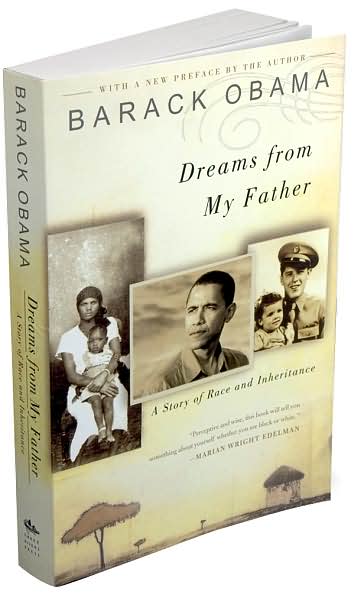
 I had not planned it this way, but these past couple of weeks I was listening to the good president Obama narrate Dreams From My Father during my commute, and reading Sudhir Venkatesh’s Gangleader For a Day as I fell asleep.
I recommend both books– especially Dreams to understand the incredibleness of what we’ve wrought here by electing Barack Obama president. Talk about the audacity of hope. And hearing him narrate it is quite a pleasure, doing voices, Kenyan accents, f’words and all.
∞
If you’ve read Freakonomics, you’ve read Sudhir Venkatesh‘s work. The chapter about why drug dealers live with their mothers was based on his research. This guy is a son of Indian immigrants, raised in protected suburbs of California, studying sociology in the worst neighborhoods of Chicago the only way that seems logical to him. By hanging out with the drug dealers, the hustlers, the prostitutes and average folk in the Robert Taylor Homes, projects in the south side of Chicago. By hanging out with them for more than half a decade.
It is quite a story, and it smashes all kinds of stereotypes about people who live in these circumstances.
∞
And it was chance that I was reading both of these books at the same time, but they have a common thread. Poor black communities in Chicago, their communities, community leadership, the futility and the hopefulness.
 Obama was there in the mid-80s (in this book, obviously he comes back to Chicago later in life), working as a community organizer to help people. Venkatesh was there in the early ’90s, seeing things from the other side, among the poor, the hustled, the hustlers. Where Obama is hopeful, Venkatesh starts out naive and ends up cynical. To be fair, in the time-frames that these books cover, Venkatesh has actually spent more time among the poor black community than Obama.
But I wonder if their paths ever crossed? Venkatesh was a graduate student in the University of Chicago while he was hanging out in Robert Taylor. Obama was a professor there at the same time. There are only two references I can find. The first is that Obama is in Venkatesh’s documentary Transformation. And this Forbes article:
(Venkatesh) heartily approves of the proposal by Barack Obama–a fellow pickup basketball player at the University of Chicago when Venkatesh studied there–to expand the Earned Income Tax Credit to give a bigger break to low-income parents.
So did they play basketball with each other, or did they both happen to play basketball in the same university around the same time? It’s like saying I played basketball in Chicago when Jordan played for the Bulls. I did. In a suburban driveway.
∞
The governor of my state, Deval Patrick, lived in the Robert Taylor Homes. So did Mr. T. I wonder if their paths ever crossed?
 I’ve been meaning to read Phillip K. Dick’s
 Things
You must be logged in to post a comment.